A new monograph documents change in the Polish Kamień Lagoon’s wildlife
A BESTbelt-supported publication brings together decades of research on Kamień Lagoon and the Dziwna River, documenting ecological change and identifying conservation priorities for this Natura 2000 site.
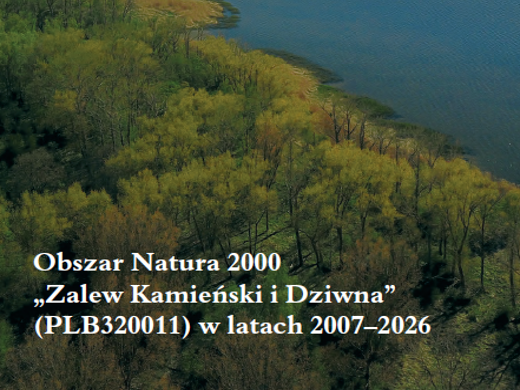
The Kamień Lagoon and the Dziwna River form a valuable wetland complex in north-western Poland, along the Baltic section of the European Green Belt. A new monograph, “Obszar Natura 2000 «Zalew Kamieński i Dziwna» (PLB320011) w latach 2007–2026”, brings together nearly two decades of conservation experience and more than 25 years of field research.
Across its 234 pages, the volume examines the area’s geological history, vegetation, fish, amphibians, reptiles, mammals and birds. Particular attention is paid to migrating, wintering and breeding waterbirds. Long-term records document changes in bird populations, shifts in grey heron and great cormorant colonies, and the decline of several species associated with open meadows and wetlands.
The authors also examine pressures from recreation, shoreline development and habitat change, and propose priorities for improved monitoring and conservation management. Published in 400 printed copies and available online free of charge, the monograph offers a resource for researchers, public authorities and everyone interested in protecting the Oder estuary.
The monograph was prepared by under the EU-funded BESTbelt project “Revision of the draft conservation tasks plan for the Kamień Lagoon and Dziwna River Natura 2000 site”, implemented by the Green Federation “GAIA” with the West Pomeranian Nature Society from October 2024 to September 2026.