
New large scale nature conservation project “European Green Belt in the Trilateral Border Area Saxony Bavaria Thuringia”
A new large scale and long-term nature conservation project along the German Green Belt has just been kicked off! Its aim is to build border-crossing regional networks for nature conservation, sustainable land use, and preserving a highly valuable cultural landscape along the European Green Belt.
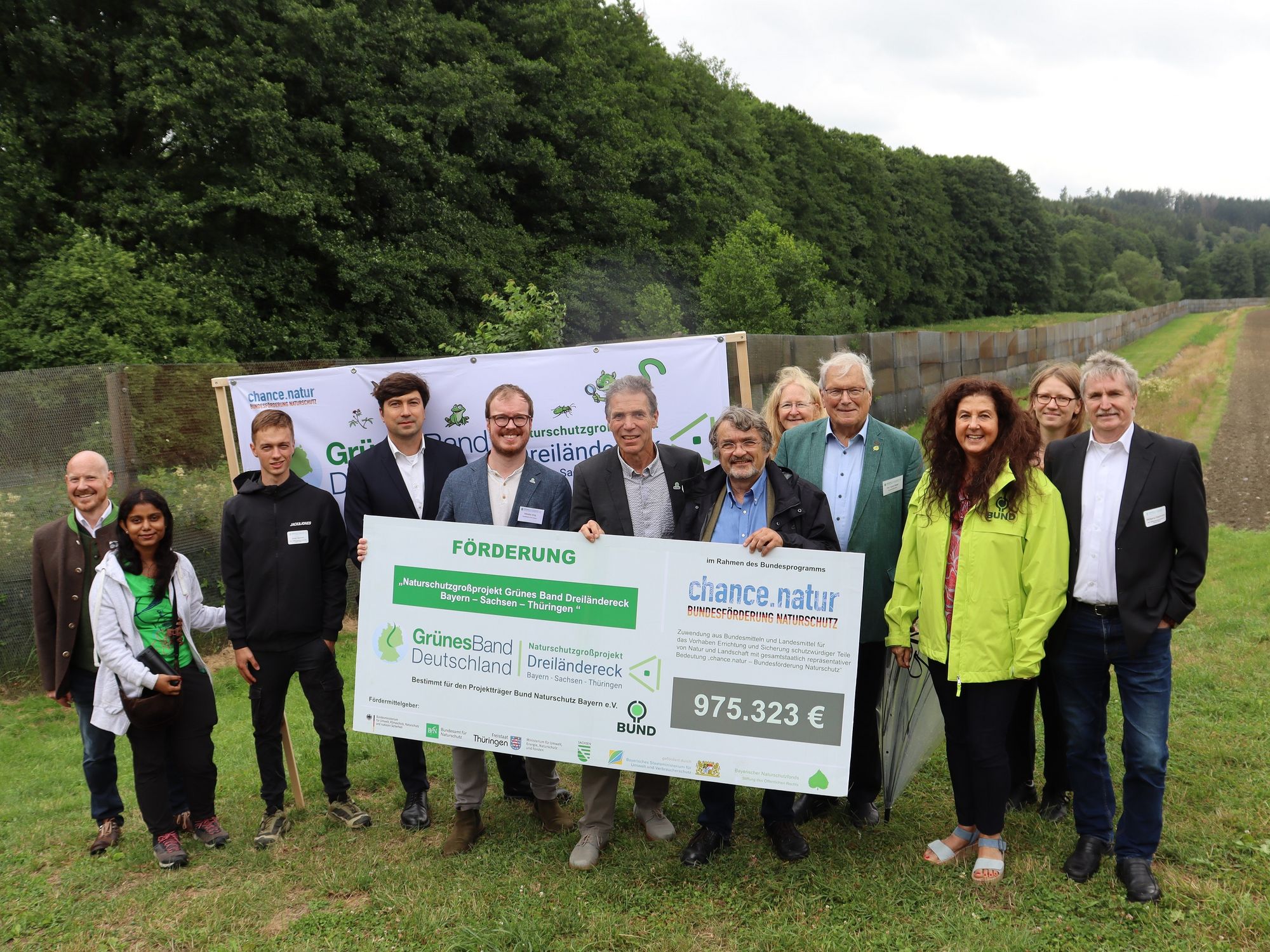
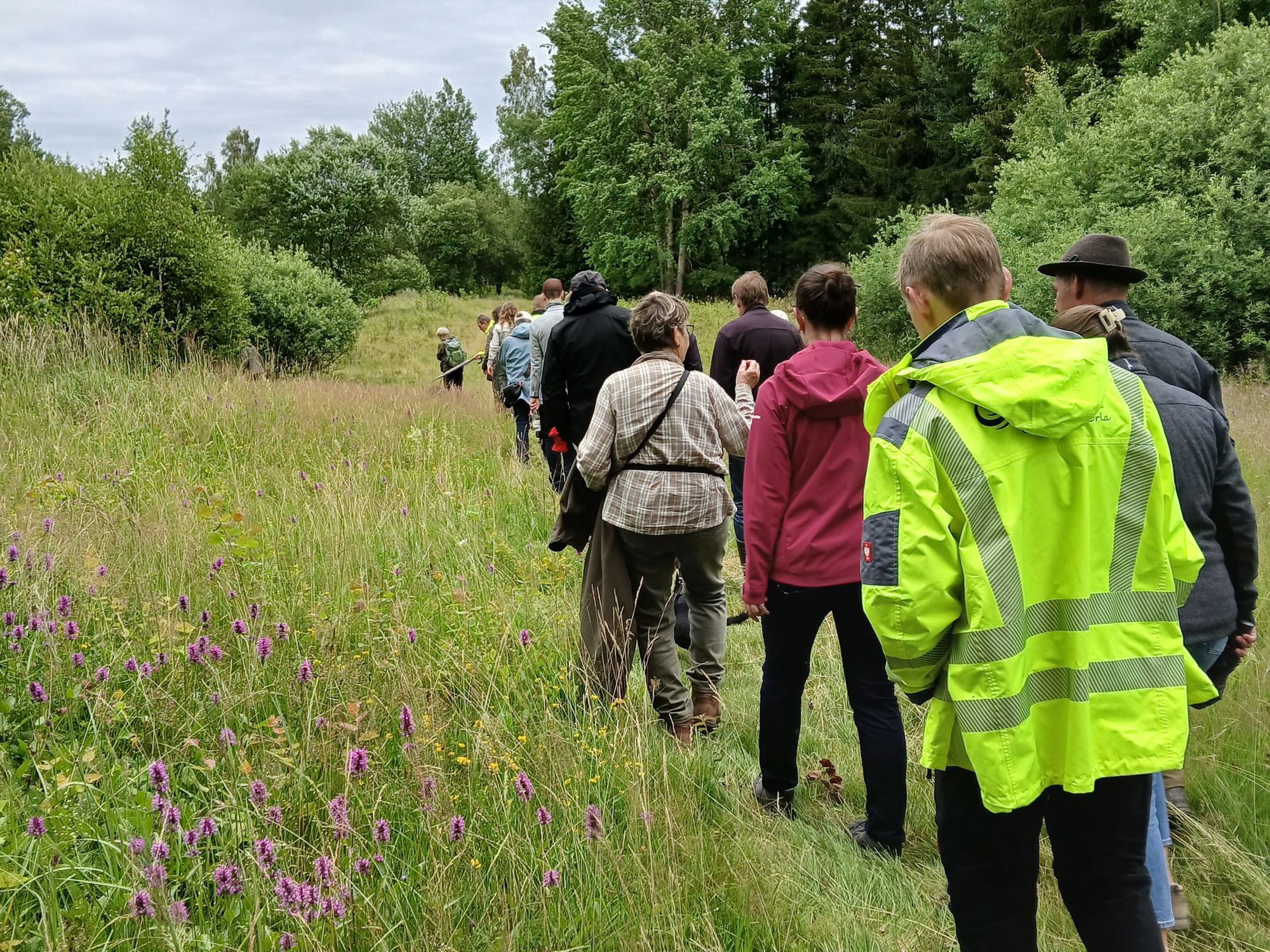

The project's kick-off event took place on 6 July 2026 with prominent attendees. The Parliamentary State Secretary of the Thuringian Ministry for the Environment, Bettina Hagedorn; the Bavarian Minister-President, Dr Markus Söder; the Bavarian Environment Minister, Thorsten Glauber; the Thuringian State Secretary for the Environment, Karin Arndt; and the Saxon State Secretary for the Environment, Ulrich Menke, officially launched the three-year nature conservation project at a historic site — the German-German Museum in Mödlareuth — which involves three counties in three federal states.
In Germany, large-scale nature conservation projects are a national project category. Rather than focusing on small areas, they aim to protect and restore entire landscapes. The project area is particulary valuable due to several reasons: it extends for more than 100 kilometres along the European Green Belt and stretches from the Czech border to the Thuringian Schist Mountains. The area includes valuable mountain meadows, heathlands, natural rivers, fens, rock habitats and ponds. Its habitats and watercourses run through large areas of intensively farmed land and represent an essential connecting structure in the region. The Green Belt in Saxony, in particular, has been consistently maintained to a fairly high standard since 1990, which can have a knock-on effect on other areas.
At the same time, the area poses challenges as well: due to the size of the area and the large amount of relevant stakeholders clear approaches will be required to plan effectively. Both events that bring together the overarching stakeholders and local events that bring together the respective stakeholders in sub-regions will be required. At the same time, overcoming these challenges can bring a big success for the region: joint solutions with municipalities, farmers and foresters in order to preserve and develop the rich cultural landscape for endangered species and habitats.
The project “European Green Belt in the Trilateral Border Area Saxony Bavaria Thuringia” is funded by the National Agency for Nature Conservation, the Thuringian Ministry for Environment, Energy, Nature Conservation and Forestry, the Bavarian State Ministry of the Environment and Consumer Protection and the Saxonian State Ministry of the Environment and Agriculture.
The project is divided into two sub-projects: one in which specific measures are planned and coordinated, and networks are established. This will result in a conservation and development plan and an integrated socio-economic study. If all of this appears feasible, a second application will be submitted for the ten-year implementation phase.
Current project phase: Phase 1: November 2025 – October 2028 (based on phase 1, phase 2 will be an implementation phase of 10 years)
For more information, please contact:
Karin Kowol, Project manager Green Belt (BUND Thuringia), k.kowol(at)bund-thueringen.de