
Unlocking the secrets of restoring degraded eco-systems along the Central European Green Belt
A map is worth a thousand words. Then what about an atlas? Let’s find out what we can learn from successfully implemented restoration actions supporting connectivity, biodiversity and ecosystem services improvement along the Central European Green Belt.
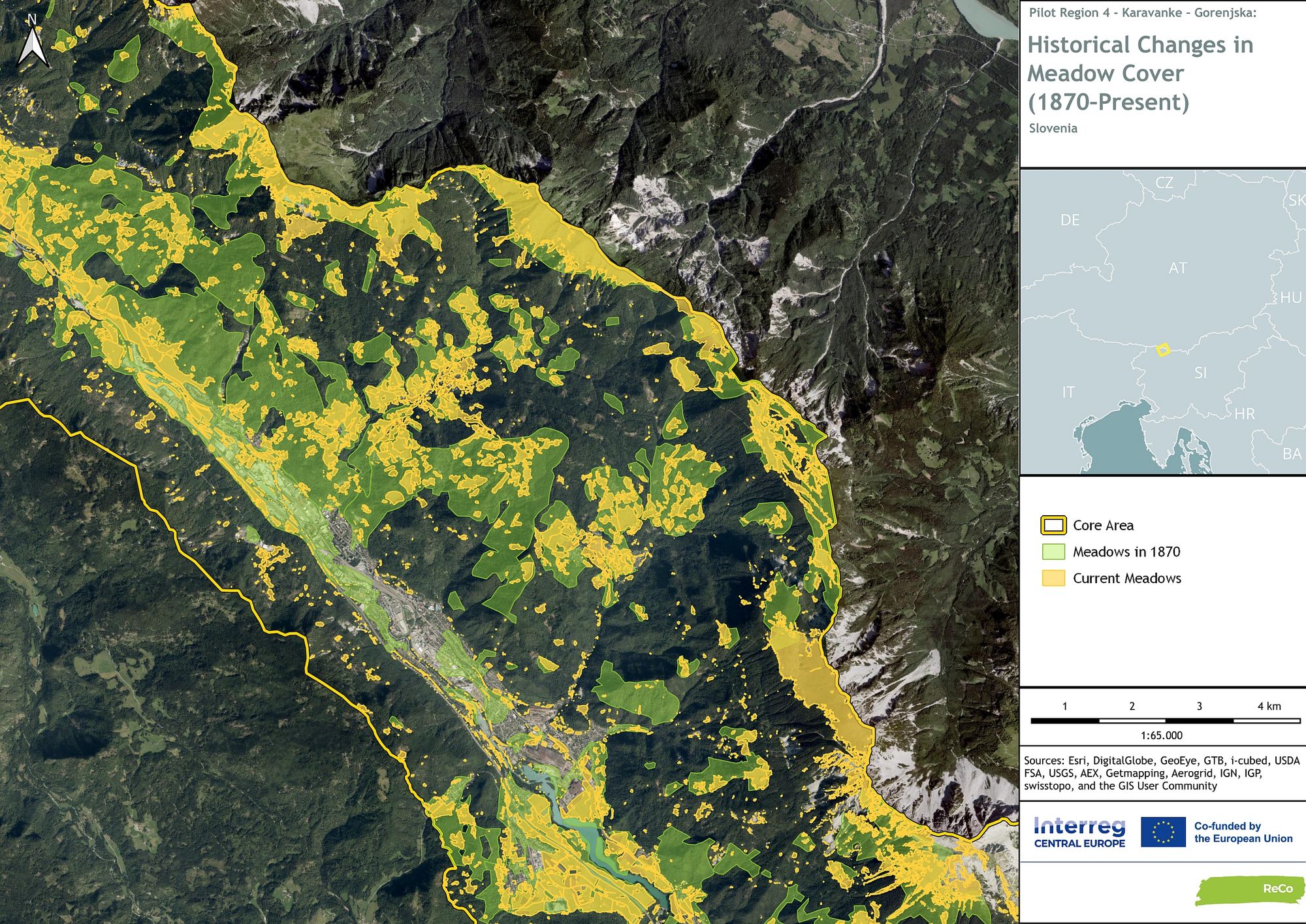
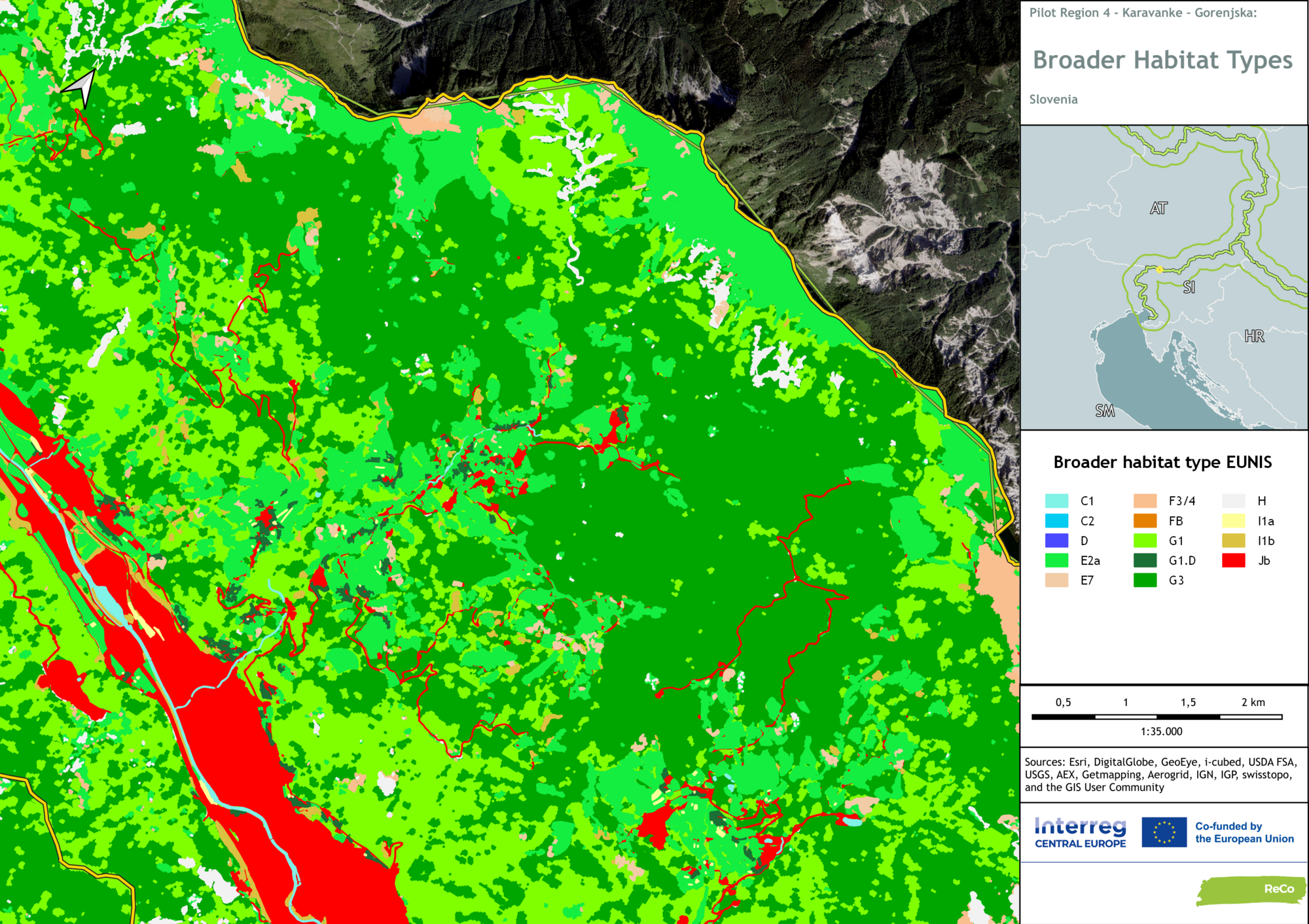
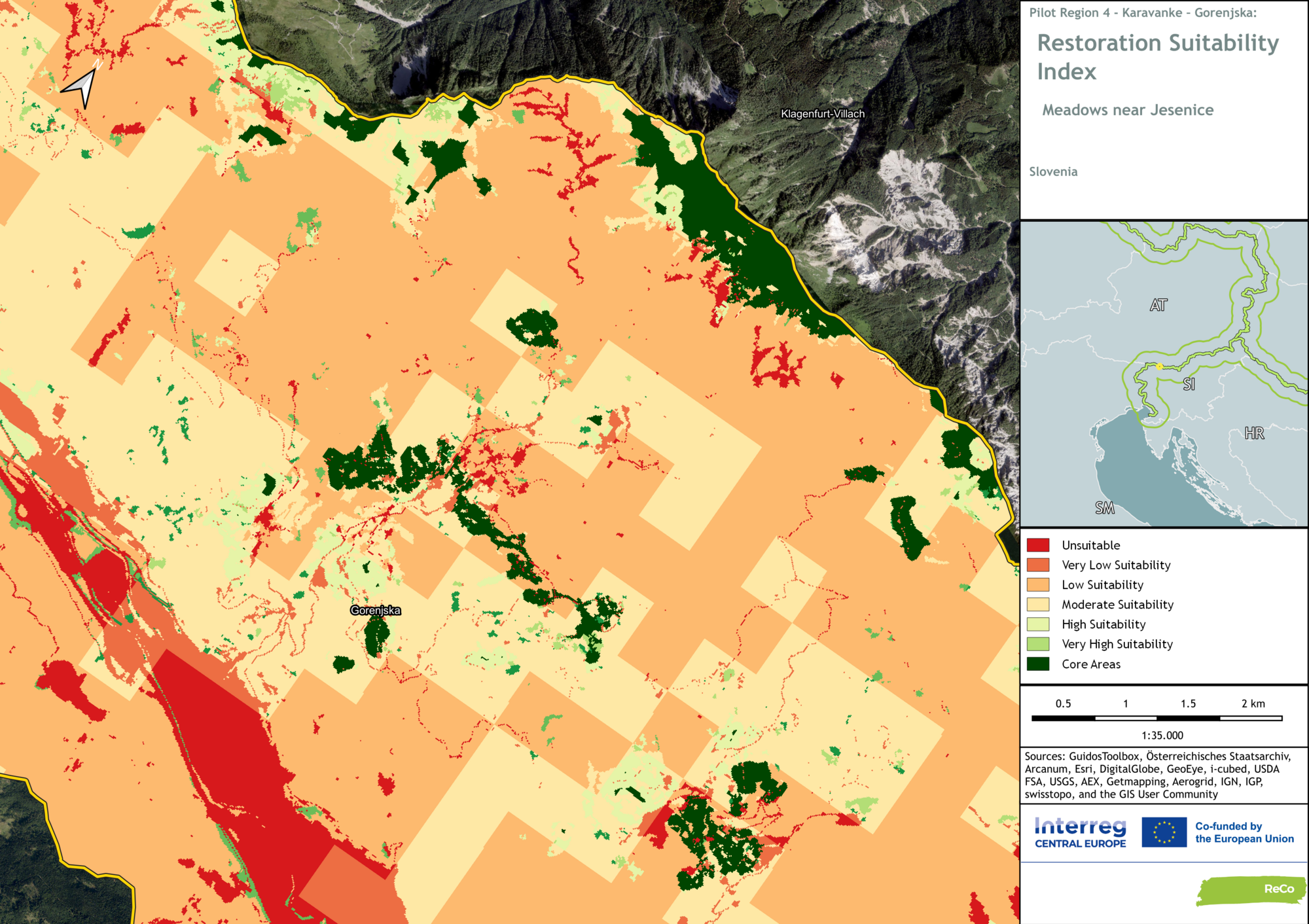
The Central European Green Belt, like other valuable landscapes, is under the increasing pressures of intensive land use, fragmentation and climate change, which lead to a decline in biodiversity and habitat degradation. To tackle these issues, a transnational cooperation is essential. This is reflected in the international Interreg project “ReCo – Restore to Connect”, which aims to restore ecosystems to enhance their connectivity and support the biodiversity within the Central European Green Belt..
One of the main tasks is to identify localities for potential restoration in six pilot regions in Poland, Germany, Czech Republic, Austria, Slovenia and Italy, which cover different types of habitats (from dry grasslands to alpine meadows, from inland wetlands to coastal wetlands) and species and their respective habitats (from the European wildcat to the European bison). Identification of these localities is based on combining various present and historical data and spatial analyses.
While historical data can inform us of the former location of targeted habitats, present data show us their current distribution, connectivity status and potential ecosystem services they provide. The combination of these analyses leads to the identification of localities suitable for restoration as it can be seen in a series of maps from the pilot regions.
You can find the ‘Transnational atlas on national level along the CE EGB and for six ReCo pilot regions’ including those maps here.
The ReCo project is co-funded by the European Union and runs from 2023 until 2026. You can learn more about the project on the official project website.
To learn more about how the maps were created, contact:
Manuela Londoño Jiménez: University of Vienna, Department of Botany and Biodiversity Research, Biodiversity Dynamics and Conservation Group, Rennweg 14, A-1030 Vienna, manuela.londono.jimenez(at)univie.ac.at or Hana Skokanová: Landscape Research Institute, Department of Landscape Ecology, Lidická 25/27, 60200 Brno, skokanova(at)vukoz.cz